
Campus & Community
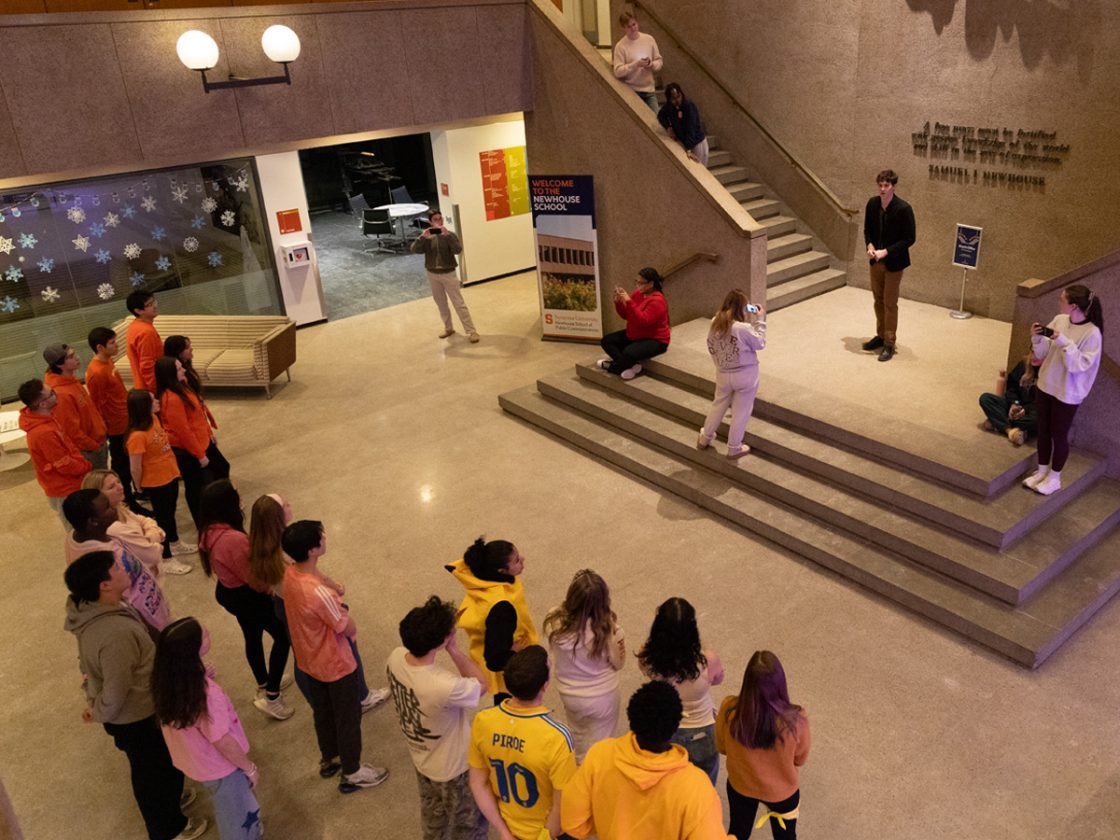
At premiere night filming, host Jack Wyant welcomes this season’s “castaways” to Syrvivor’s 15th season while production teammates capture footage. (Photo courtesy of Syrvivor Syracuse)
Reality TV Meets Campus Life in Student-Run Syrvivor Club
When Jack Wyant ’28 stepped into the atrium of Newhouse 101 on a Sunday night in January, he looked out at 22 students gathered for the premiere filming of Syrvivor Syracuse’s 15th season. The balconies above were lined with alumni and production crew members. He clapped to signal the start.
“Welcome to Syrvivor Syracuse, season 15!” Wyant announced, and the room erupted with energy.
“I looked over at the other e-board [executive board] and I was like, ‘This is out of our hands now. We’ve done everything. The game has started,’” says Wyant, an acting major in the College of Visual and Performing Arts (VPA) and the season’s host. “There’s just an electric energy in the room. It’s like nothing else.”
As CBS’s “Survivor” celebrates its milestone 50th season premiering Wednesday, Feb. 25, Syracuse students have spent years building their own version of the reality competition. What started as a small student club has evolved into a full-scale production, complete with casting calls, immunity challenges, Tribal Councils and seasons released on YouTube.
The club has filmed 14 seasons and released seven publicly, with player applications now numbering 60 to 70 students each semester. Season 15, filming now through April, features 22 players and a twist mirroring the real show’s 50th season: seasoned players returning to compete a second time.
Alliances That Cross Academic Lines
Syrvivor attracts students from every corner of the University. Ericah Wakiaga ’27, a mechanical engineering major in the College of Engineering and Computer Science and the club’s executive producer and president, says the cross-disciplinary nature is one of the club’s greatest strengths.
“For my degree, every single class is an engineering class. I don’t have any electives, so I’m in class with the same people day in and day out,” Wakiaga says. “Joining a club like Syrvivor, with people outside my discipline, helps take my mind away from the world of STEM that I usually live in—that’s the best part of it.”
Justin Gomez ’26, an English and political science major in the College of Arts and Sciences and the Maxwell School of Citizenship and Public Affairs, who won the 10th season and then returned for an All Stars-themed season, entered the game without knowing anyone. He immediately researched his fellow contestants on Instagram, mapping out connections in a notebook.
“It’s grown so much. If you’ve played or if you’ve been part of the production, you’re always trying to get your friends to do it,” Gomez says. The club has become a word-of-mouth phenomenon, with players recruiting friends from across majors and schools.
Lura James ’28, a music industry major in VPA, joined as a first-year student seeking connections outside performing arts. She made it to fifth place her first season, is one of the returning players for season 15 and says that all of her closest friends she met through Syrvivor.
“Playing that first time in freshman year was one of the most special times of my entire life. It was just so perfect,” James says.
More Than Just a Game
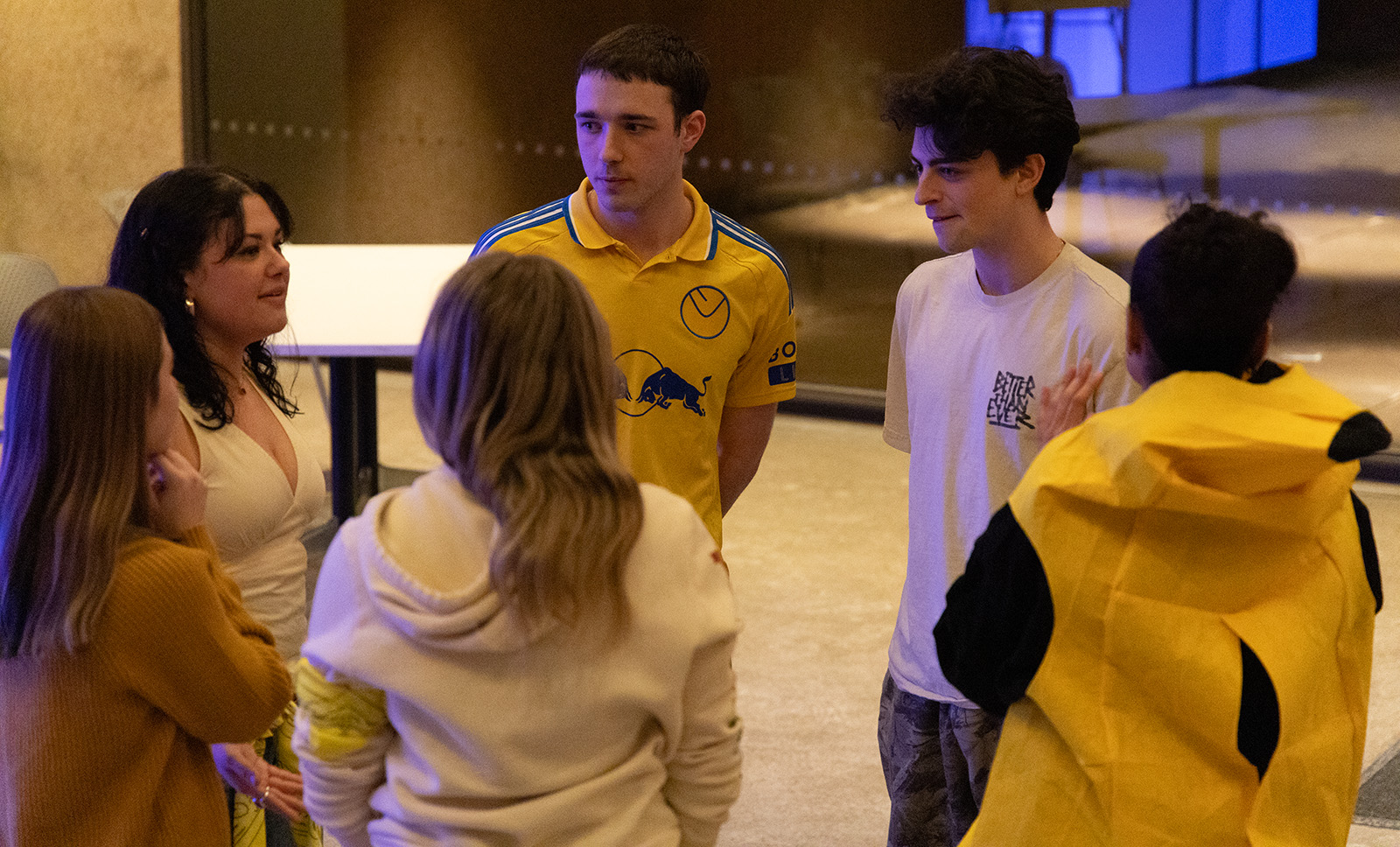
What sets Syrvivor apart from its television counterpart is the campus setting. Players aren’t isolated on an island—they’re texting constantly, strategizing between classes and sometimes running out of lectures or digging in the snow to search for hidden immunity idols, a key component of the game.
“It’s very hard [playing in a campus setting] because I can text, call whoever I want at any time of the day,” Gomez says. “You’re not secluded in your own tribe; you can reach out to other people in different tribes, so building that connection with them was also very, very important.”
Wakiaga discovered that the social dynamics mirror the real “Survivor” more than she expected. “I feel like the biggest allure of the show ‘Survivor’ is the depiction of deep social connections in spite of strenuous and uncertain circumstances,” she says. “The club is pretty accurate as compared to the real-life show—we’ve had some really deep, emotional moments, last season especially.”
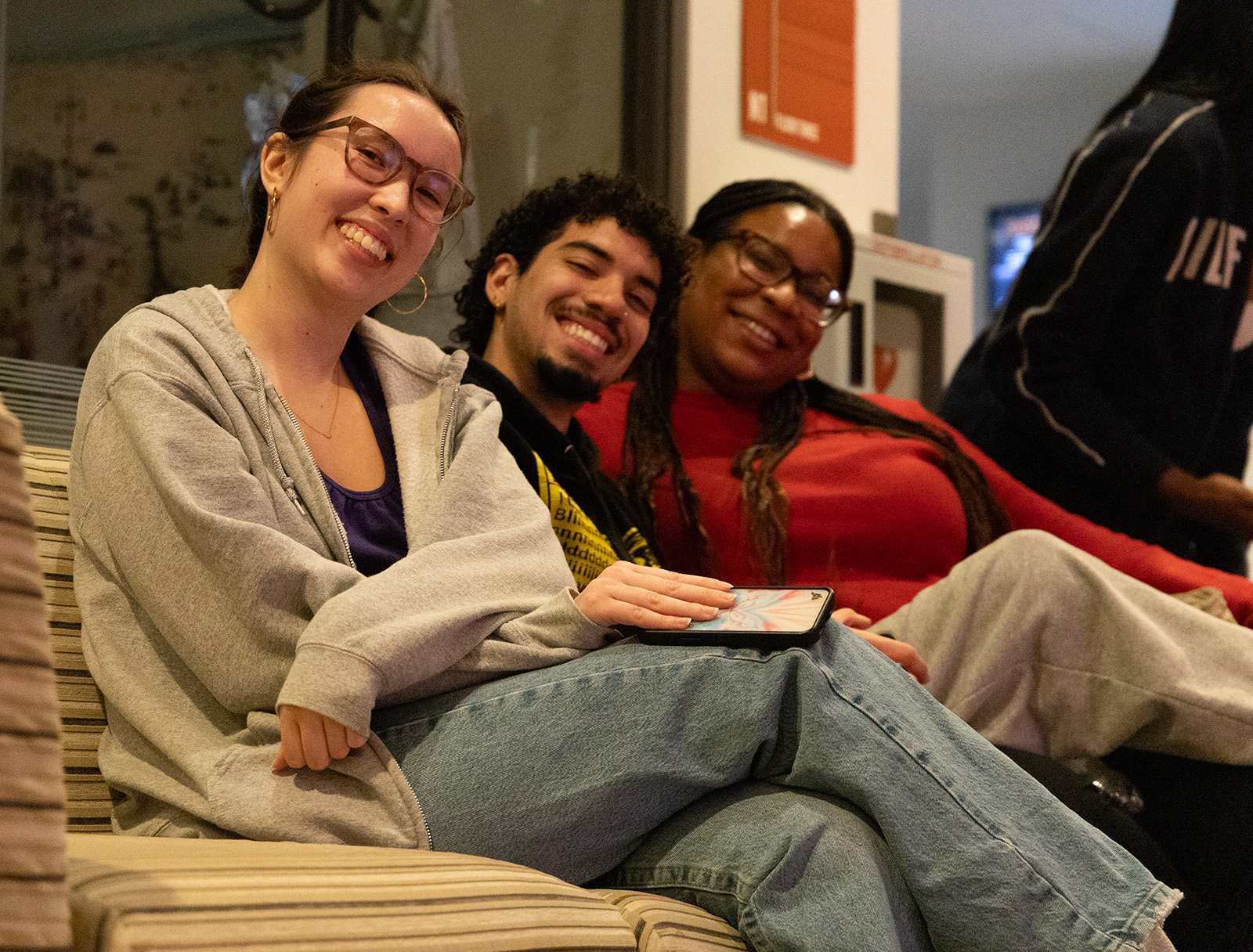
Syrvivor has evolved to build community over a shared love of competition. In past seasons, eliminated players disappeared from both the show and the club. Now, voted-out contestants can join the production or editing teams, contributing challenge ideas and staying connected to the group.
The club also created a mental health chair to support eliminated contestants through the emotional aftermath of being voted out of the game.
Hands-On Production Experience
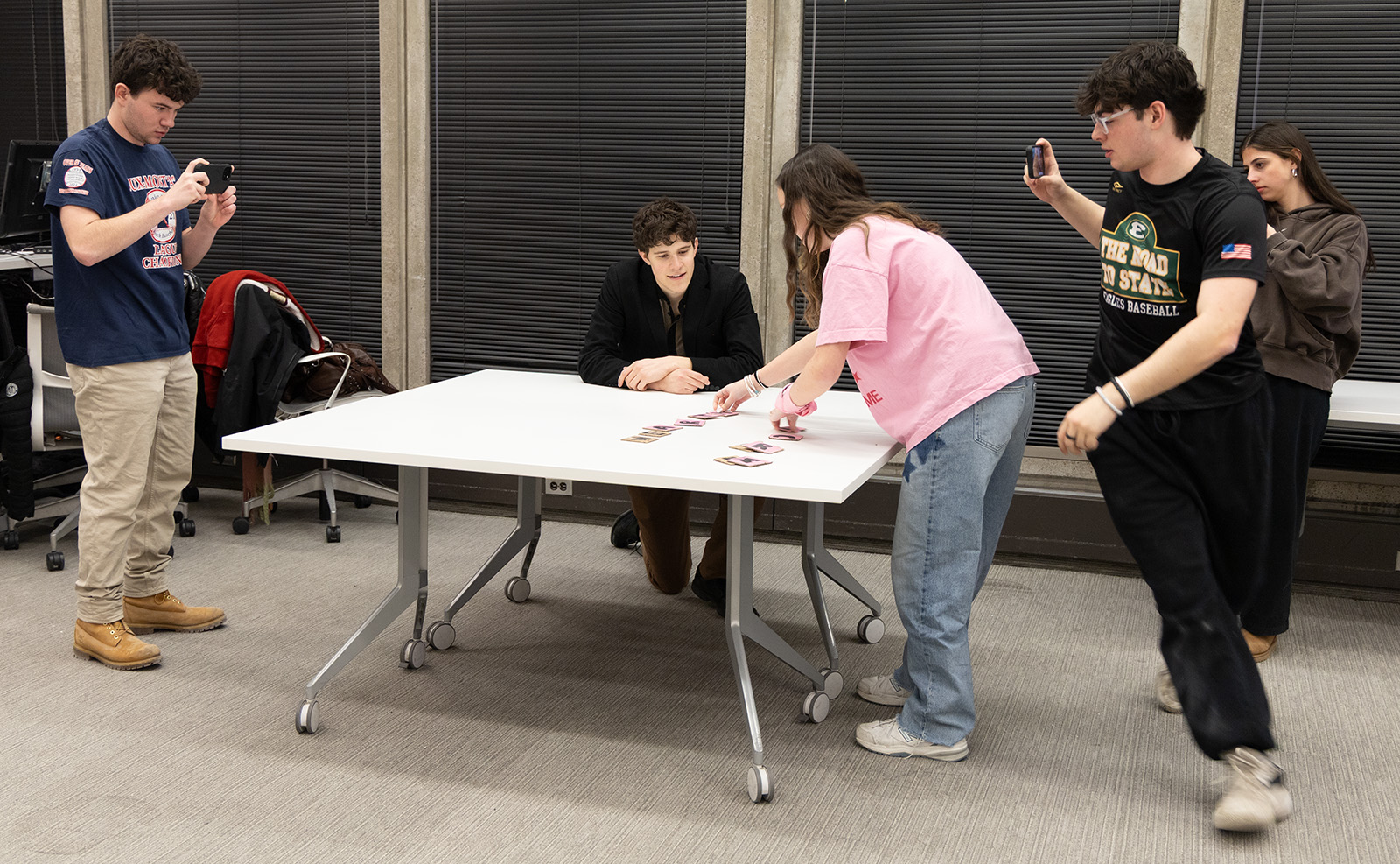
Behind every episode is an enormous student-run production operation. Wyant, who serves as both host and executive producer, spent two days conducting 30-minute Zoom interviews with each player to review rules. “We respect the sanctity of the game and what it represents, so we want it to be held in the fairest way possible,” Wyant says. “And we take cheating very seriously.”
Most filming happens after 10 p.m. to accommodate players’ schedules, often running until 1 a.m. But everyone is united in mission through their love of the game, and the experience translates across disciplines.
Wakiaga applies her engineering mindset to analyzing vote probabilities and player behavior. Wyant draws on his theater training to craft story arcs and dramatic tension. James gained editing skills and networking contacts, connecting to her music industry career goals. Gomez used his political science background to analyze how others were playing the game and politicking with their fellow contestants.
For students who grew up watching “Survivor,” the club offers a chance to live out their reality TV dreams without waiting for a casting call from CBS. And for some current and former club members who have real-life ambitions to compete on the island, Syrvivor provides invaluable experience.
“You are going to see me on that island one day,” Wyant says. “I 100% guarantee it.”
To learn more about Syrvivor or get involved, visit the organization’s YouTube, Instagram or ’Cuse Activities page.
The post Reality TV Meets Campus Life in Student-Run Syrvivor Club appeared first on Syracuse University Today.